
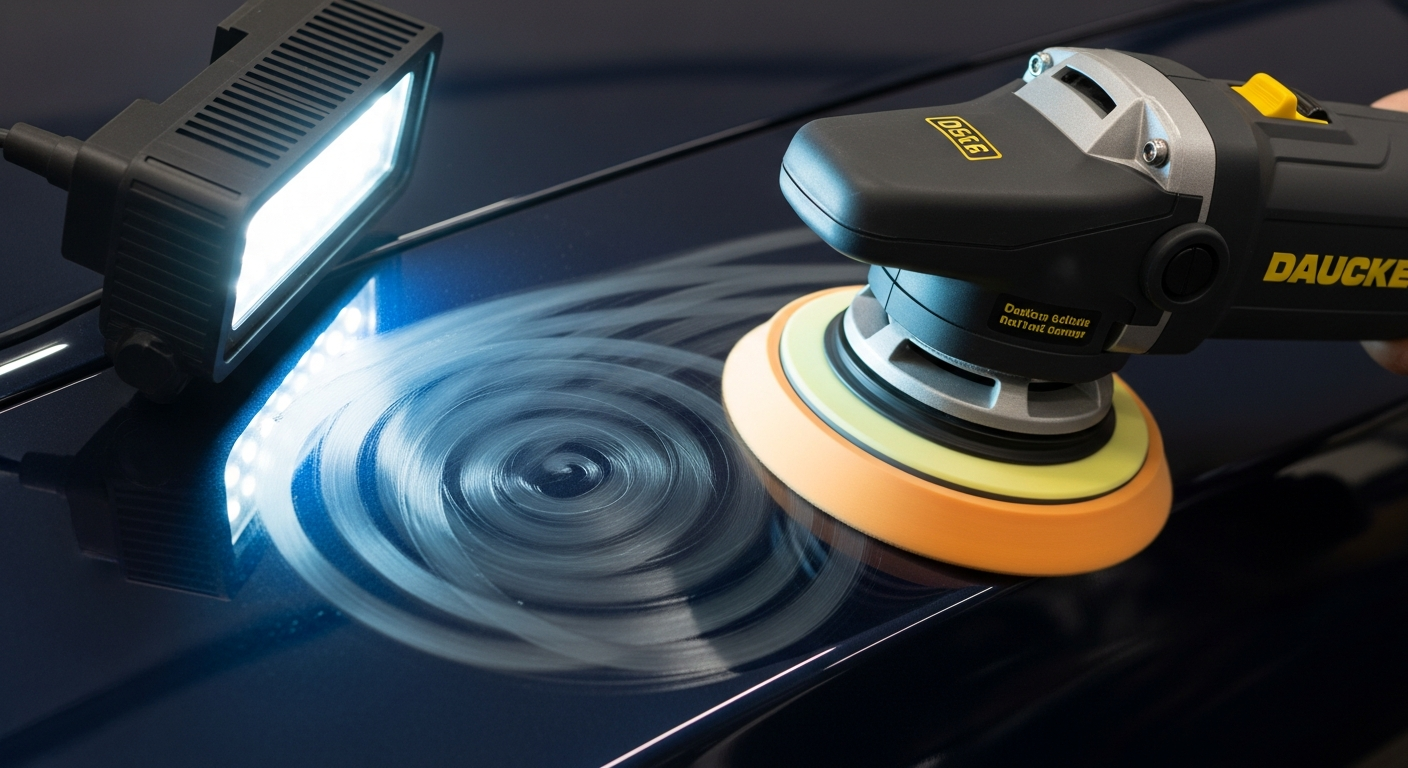
Paint correction is one of the most misunderstood services in the detailing world. Some people think it’s just fancy waxing. Others expect it to make a 15-year-old beater look factory-fresh. The truth is somewhere in between — and understanding what paint correction actually does will help you decide if it’s worth the investment for your vehicle.
At Ovill Car Wash & Detail, we perform paint correction regularly on vehicles ranging from daily drivers to weekend show cars. Here’s an honest breakdown of the process, what it fixes, what it can’t fix, and how to know if your car needs it.
What Paint Correction Actually Is
Paint correction is the process of using machine polishers and abrasive compounds to remove defects from your vehicle’s clear coat. The clear coat is a transparent layer of paint — typically 1.5 to 4 mils thick (a mil is one-thousandth of an inch) — that sits on top of the colored base coat. When people talk about “swirl marks,” “scratches,” “water spots,” and “oxidation,” they’re almost always talking about damage within this clear coat layer.
A machine polisher spins a foam or microfiber pad against the surface at controlled speed and pressure. Abrasive compound on the pad levels the clear coat around the defect, effectively removing a thin layer of clear coat until the surface is smooth and uniform again. Once the defects are gone, light reflects evenly off the surface, producing the deep, glossy, mirror-like finish that makes a corrected car look stunning.
This is fundamentally different from waxing or sealing, which just cover defects with a temporary filler. When the wax wears off, the defects reappear. Paint correction actually removes them.
What Paint Correction Fixes
Swirl Marks
Swirl marks are the circular micro-scratches visible on paint — especially dark colors — under direct sunlight or parking lot lights. They’re caused by improper washing (single-bucket method, dirty towels, automatic car washes) and are the most common defect we correct. Almost every vehicle that has never been professionally corrected has swirl marks.
Paint correction removes swirl marks completely. This is perhaps the most dramatic transformation in detailing — a swirl-covered black car goes from looking hazy and dull to deep and mirror-like in a matter of hours.
Light Scratches
Surface scratches that you can feel with your fingernail but that don’t go through the clear coat to the base coat are correctable. These include scratches from keys brushed against the surface (not deliberate keying — more on that below), fingernail marks around door handles, and scratches from branches, bushes, or improper snow removal.
The test is simple: if the scratch is white or light-colored, it’s likely in the clear coat only. If you can see the color of the base coat or the primer, the scratch is too deep for correction alone.
Water Spots and Mineral Etching
Hard water mineral deposits — a constant issue in the Ellis County and DFW area where the water is notoriously mineral-heavy — leave spots that bond to the clear coat surface. Light water spots sit on top and can sometimes be removed with a dedicated water spot remover. But spots that have been baked into the surface by the Texas sun often etch into the clear coat, leaving a permanent mark that only polishing can level out.
Oxidation
Oxidation is the chalky, faded appearance that develops when UV radiation breaks down the clear coat over time. Red and black vehicles show it most visibly, but every color is affected. If the oxidation is in the clear coat only — meaning the clear coat hasn’t failed completely — paint correction can restore the original depth and color.
In our area, oxidation is accelerated by the intense UV exposure we get eight to nine months out of the year. Vehicles that park outside without protection age dramatically faster than garaged vehicles.
Bird Dropping and Sap Etching
Bird droppings and tree sap are acidic. When they sit on paint — especially paint heated by the sun — they etch into the clear coat, leaving a dull, rough spot that won’t wash off. If the etching is shallow, paint correction levels the surrounding clear coat to match, eliminating the mark.
What Paint Correction Cannot Fix
This is where honest communication matters. Paint correction is powerful, but it has clear limitations.
Deep Scratches Through the Clear Coat
If a scratch has penetrated through the clear coat into the base coat or primer, correction cannot remove it. Leveling the clear coat down to that depth would mean removing all the clear coat in that area — which destroys the protection entirely.
Deep scratches require touch-up paint, wet sanding by a skilled technician, or in severe cases, repainting the affected panel. We’ll always be honest about which scratches we can correct and which ones need a different approach.
Rock Chips
Rock chips are impact damage — small divots where a piece of gravel has physically chipped away paint material. There’s nothing for the polisher to level because the material is gone. Rock chips are addressed with touch-up paint to fill the void and prevent rust, not with correction.
Deliberate Keying or Deep Vandalism Scratches
When someone deliberately keys a car, the scratch typically goes through the clear coat and base coat down to the primer or bare metal. This is body shop work, not detailing work. We can sometimes improve the appearance of key scratches with careful polishing, but we can’t make them disappear.
Clear Coat Failure
When oxidation has progressed to the point where the clear coat is peeling, flaking, or completely worn through, there’s no clear coat left to correct. The panel needs to be repainted. You’ll recognize clear coat failure as rough, white or milky patches — often on the hood, roof, and trunk lid where UV exposure is greatest.
Paint Fade from Base Coat Deterioration
If the color itself has faded — not just the clear coat above it — correction won’t restore the original hue. This is most common on older red vehicles where the pigment breaks down from UV exposure. Correction can remove the hazy oxidized clear coat layer and bring back some vibrancy, but the base color change is permanent without repainting.
Levels of Paint Correction
Not every vehicle needs the same degree of correction. We typically classify the process in stages:
One-Step Correction (Enhancement Polish)
A single pass with a medium-cut compound and polishing pad. This removes 50-70% of swirl marks and light defects, producing a noticeably cleaner, glossier finish. It’s appropriate for vehicles in relatively good condition that just need refinement — newer cars with light wash marring, or well-maintained vehicles that need a refresh.
Two-Step Correction
A cutting stage followed by a polishing stage. The cut removes 80-90% of defects, and the polish refines the surface to a high gloss. This is the sweet spot for most vehicles — significant improvement without excessive clear coat removal.
Multi-Stage Correction
Three or more passes with progressively finer abrasives. This is reserved for show cars and enthusiast vehicles where the owner wants 95%+ defect removal and a mirror-like finish. It removes the most clear coat and takes the most time, so it’s not appropriate for every vehicle — especially older cars with potentially thin clear coat.
The Clear Coat Reality
Here’s the critical point that many detailers downplay: every round of paint correction removes clear coat permanently. The clear coat doesn’t grow back. On a factory-painted vehicle with healthy clear coat, there’s typically enough material for two to four correction cycles over the life of the car. On a vehicle that’s already been corrected multiple times, or one with thin factory clear coat, aggressive correction can cause more harm than good.
This is why we measure clear coat thickness with a paint depth gauge before starting any correction. If the readings show the clear coat is thin, we adjust our approach accordingly — sometimes recommending a one-step enhancement instead of a full correction, or focusing correction only on the most visible panels.
It’s also why protecting the paint after correction is essential. A ceramic coating or quality sealant preserves the corrected finish and reduces the need for future correction. Spending money to correct your paint and then leaving it unprotected makes no sense — especially in the Texas climate.
Is Paint Correction Worth It?
For most vehicle owners in the DFW area, a one-step or two-step correction paired with ceramic coating or sealant is one of the best investments in vehicle appearance and long-term value. The transformation is dramatic, the results last for years with proper maintenance, and the protected finish stays cleaner and easier to wash.
If you’re curious whether your vehicle would benefit from paint correction, the easiest way to find out is to bring it by Ovill Car Wash & Detail in Ovilla, TX. We’ll assess the paint under proper lighting, measure the clear coat thickness, and give you a straightforward recommendation. No pressure, no upsell — just an honest evaluation of what your car needs.
Call us at (469) 571-1853 to schedule a paint assessment, or stop by and we’ll take a look.