
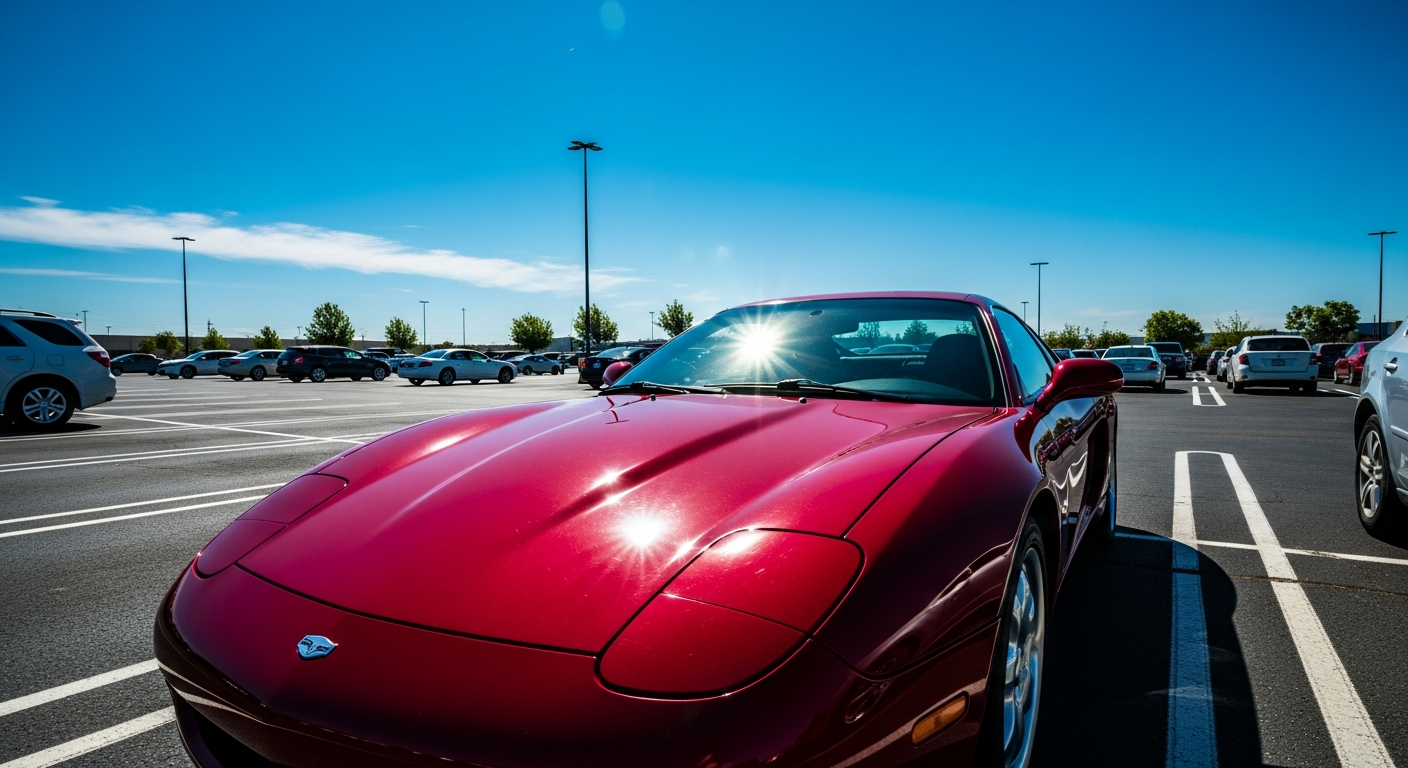
Anyone who’s lived through a North Texas summer knows what the sun can do. Steering wheels too hot to grip, seatbelt buckles that brand your skin, and dashboards that shimmer with heat haze. But the damage you can see and feel is only part of the story. UV radiation works silently on your vehicle’s surfaces every day, breaking down paint, plastics, rubber, and leather at the molecular level. In the Ovilla and Midlothian area, where summer temperatures routinely push past 100 degrees and the sun is relentless from May through September, protecting your car from UV damage isn’t optional — it’s essential maintenance.
What UV Does to Your Paint
Your car’s clear coat is its first line of defense against the elements. UV radiation breaks down the chemical bonds in clear coat, causing it to oxidize. Oxidation shows up as a chalky, faded appearance — most noticeable on red, black, and dark-colored vehicles. Once oxidation sets in deep enough, the clear coat fails entirely, leaving the base coat exposed and vulnerable to peeling and rust.
Even before visible oxidation occurs, UV damage degrades the clear coat’s ability to protect against chemical etching from bird droppings, tree sap, and acid rain. A healthy clear coat can resist these contaminants for hours or days; a UV-weakened clear coat may etch permanently within minutes.
What UV Does to Your Interior
Interior damage is equally severe and often more expensive to address. Dashboards and door panels are made from vinyl and plastic compounds that become brittle when exposed to prolonged UV radiation. Cracks start small — hairline fractures along the edges — and spread across the surface. Replacing a cracked dashboard on a modern vehicle can cost $1,000 or more.
Leather seats fade and dry out without UV protection. The natural oils that keep leather supple evaporate faster in heat and direct sunlight, leading to surface cracking and eventually tearing. Fabric seats and carpets fade in color, and the UV-weakened fibers become more susceptible to staining and wear.
Window Tinting: Your Best First Defense
Quality window tint blocks up to 99% of UV radiation and significantly reduces interior heat buildup. Texas law allows up to 25% VLT (visible light transmission) on front side windows and any darkness on rear windows — dark enough to provide serious protection without legal issues.
When choosing tint, look for ceramic or nano-ceramic film rather than basic dyed film. Ceramic tint blocks more heat (up to 60% of solar energy), doesn’t fade or turn purple like dyed films, and provides superior UV rejection. The upfront cost is higher — typically $300 to $600 for a full vehicle — but ceramic tint lasts the life of the vehicle and pays for itself in reduced A/C load and interior preservation.
A windshield clear ceramic tint strip (or full windshield tint where legal) is particularly valuable. The windshield is the largest glass surface on your vehicle and allows the most UV exposure to your dashboard, steering wheel, and front seats.
Ceramic Coating for Exterior Protection
Ceramic coating creates a semi-permanent barrier between your paint and the elements. A professional-grade ceramic coating provides UV resistance comparable to a permanent layer of sunscreen for your paint. The SiO2-based coating doesn’t break down under UV exposure the way wax and sealant do, which means your paint stays protected through the entire Texas summer without reapplication.
Beyond UV protection, ceramic coating makes your car dramatically easier to wash. Dust, pollen, and road grime rinse off with minimal effort because they can’t bond to the coated surface. In a climate where you should be washing your car every two to three weeks to prevent baked-on contaminant damage, that time savings adds up.
Regular Washing Matters More Than You Think
Every contaminant that lands on your paint — bird droppings, bug splatter, tree sap, pollen — becomes more damaging when baked by the sun. A bird dropping that would rinse off harmlessly in cooler weather can etch permanently into clear coat within an hour on a 100-degree day.
Regular washing removes these contaminants before they cause lasting damage. In summer, aim for a hand wash every two weeks at minimum. If you park under trees or near power lines (where birds perch), increase that frequency. Always remove bird droppings and bug splatter as quickly as possible — carry a small spray bottle of quick detailer and a microfiber towel in your trunk for spot treatment.
Parking Strategy
Where you park has a massive impact on cumulative UV exposure:
- Use covered parking whenever available. A carport or garage eliminates direct UV exposure entirely.
- If you park outside, nose your car east in the afternoon. The western sun is the most intense, so keeping it off your dashboard and driver’s side reduces the highest-exposure surfaces.
- Use a windshield sunshade. It looks old-school, but a reflective sunshade reduces dashboard surface temperatures by 40 to 50 degrees and blocks direct UV from hitting your steering wheel, gauge cluster, and front seats.
- Consider a car cover for extended outdoor parking. If your vehicle sits outside for days at a time, a breathable UV-resistant car cover is worth the investment.
Interior Protection Products
Apply a UV protectant to your dashboard, door panels, and any exposed plastic or vinyl surfaces every time you detail. Look for products that absorb into the material rather than sitting on top as a greasy film — those surface-level dressings attract dust and can make surfaces dangerously slippery.
For leather seats, use a dedicated leather conditioner with UV inhibitors every two to three months. Conditioning replaces the oils that heat and sunlight strip away, keeping the leather flexible and resistant to cracking.
Put It All Together
The most effective approach combines multiple layers of protection: ceramic coating on the exterior, ceramic window tint, regular washing to remove baked contaminants, interior UV protectant treatments, and smart parking habits. No single product or habit is enough on its own in Texas heat, but together they keep your vehicle looking and performing like it should.
At Ovill Car Wash & Detail, we help Ovilla and Midlothian area drivers protect their vehicles from the Texas sun with professional hand washing, ceramic coating, and full interior detailing with UV-protective treatments. If your car is already showing signs of sun damage — faded paint, chalky trim, or cracking interior surfaces — bring it by and we’ll assess what it needs to get back on track.