
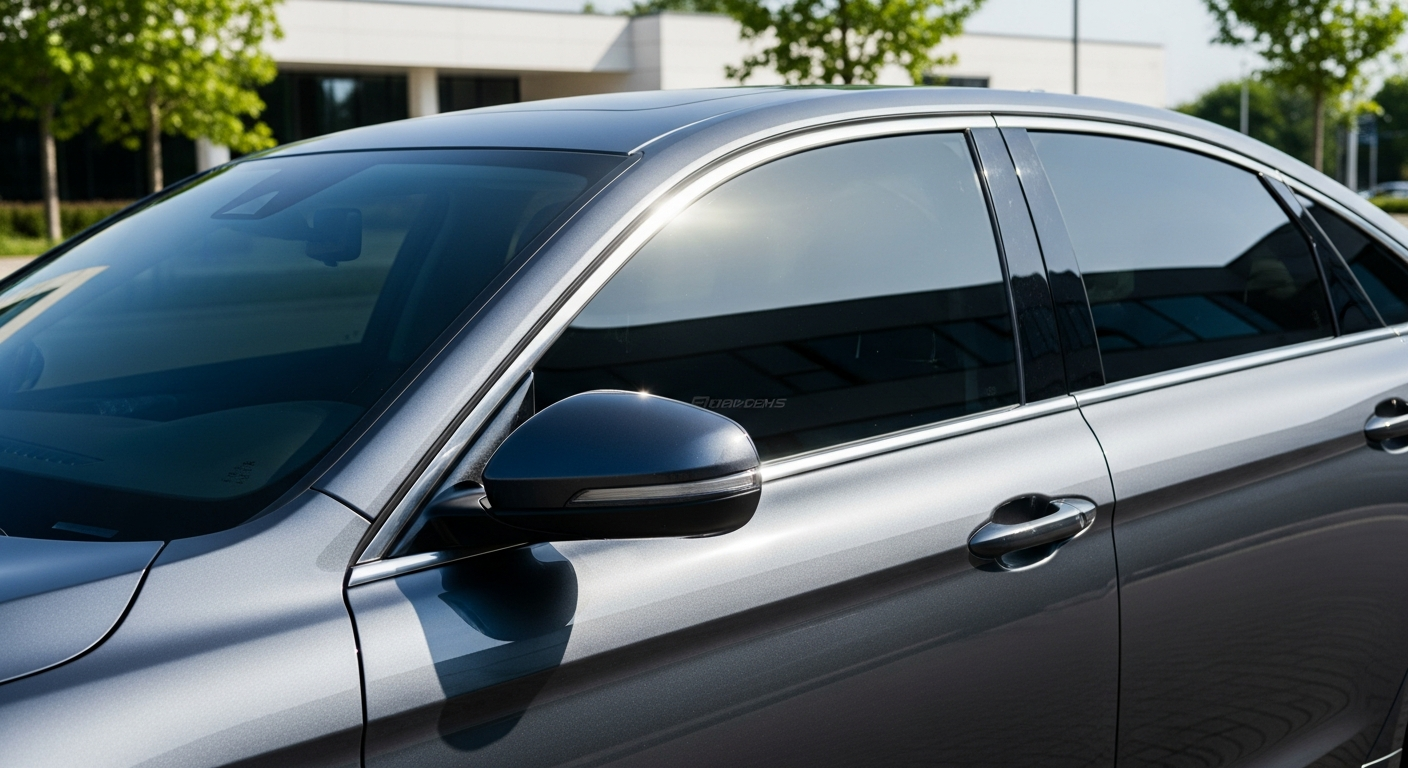
If you live in Texas and your car doesn’t have window tint, you already know the punishment. Scorching leather seats in July. A steering wheel you need oven mitts to touch. Blinding afternoon glare on US-287. And behind all of that discomfort, invisible UV radiation steadily destroying your interior surfaces every day you drive.
Window tinting is one of the most common vehicle upgrades in the DFW area, and for good reason. But not all tint is created equal, and the wrong choice can mean wasted money, poor visibility, or a ticket. Here’s an honest breakdown of whether tinting is worth it, what type to get, and what Texas law actually allows.
The Case for Tinting in Texas
The argument for window tint in North Texas comes down to three factors: UV protection, heat rejection, and glare reduction. Each one has real, measurable benefits.
UV Protection
Glass blocks some UV radiation on its own, but factory windows on most vehicles only block about 60-70% of UVA rays. The remaining 30-40% passes through and hits every surface inside your car: dashboard, steering wheel, seats, door panels, and your own skin.
Over time, that UV exposure cracks dashboards, fades upholstery, dries out leather, and degrades every plastic surface in the cabin. Replacing a cracked dashboard on a late-model vehicle can cost well over $1,000. Quality window tint blocks up to 99% of UV radiation, dramatically slowing that degradation.
There’s a personal health angle too. Dermatologists have documented significantly higher rates of skin damage on the left side of the face and left arm for frequent drivers — the side exposed to the driver’s window. If you spend any meaningful time in your car, UV-blocking tint is a health consideration, not just an aesthetic one.
Heat Rejection
The interior of a car parked in the Texas sun can reach 150 to 170 degrees Fahrenheit. Even with the A/C running, solar heat pouring through untinted glass forces your climate system to work significantly harder to cool the cabin.
Quality ceramic tint rejects 40-60% of solar energy — meaning measurably less heat enters the cabin through the glass. The practical result is a cooler car when you get in, faster cool-down time, less strain on your A/C compressor, and marginally better fuel economy. In the Ovilla area, where your car might sit in an uncovered parking lot for hours at a stretch, the cumulative effect over a Texas summer is substantial.
Glare Reduction
Anyone who’s driven west on Highway 287 toward Waxahachie in the late afternoon knows how dangerous sun glare can be. Tint reduces visible glare without eliminating visibility, making driving safer and more comfortable during the worst sun angles.
Types of Window Tint: Not All Film Is Equal
There are four main categories of window tint film, and the differences in performance, durability, and appearance are significant.
Dyed Film
The cheapest option, typically $100-$200 for a full vehicle. Dyed film provides privacy and some glare reduction, but minimal heat rejection and moderate UV protection. It also degrades faster than other types — expect the film to turn purple and bubble within two to four years, especially in Texas heat.
If you’re on a tight budget, dyed film is better than nothing. But in this climate, it’s a short-term solution.
Metalized Film
Metalized tint uses tiny metallic particles embedded in the film to reflect heat and UV radiation. It’s more durable than dyed film and provides better heat rejection. The downside is that metallic particles can interfere with cell phone reception, GPS signals, and radio. For some vehicles with antenna-embedded windshields, this is a dealbreaker.
Carbon Film
Carbon film offers good heat rejection (around 40%) without the signal interference issues of metalized tint. It has a matte finish that many people prefer aesthetically, and it’s more fade-resistant than dyed film. Carbon tint typically costs $200-$400 for a full vehicle and lasts five to ten years.
Ceramic Film
Ceramic tint is the top tier. It uses nano-ceramic particles to block up to 60% of solar heat and 99% of UV radiation without any metallic components — so no signal interference. It maintains excellent optical clarity, doesn’t fade or discolor over time, and typically carries a lifetime warranty from the manufacturer.
The cost is higher — generally $350-$600 for a full vehicle — but ceramic tint is a one-time investment that lasts the life of the car. Given that a Texas summer will punish inferior tint into early failure, the long-term math favors ceramic for most drivers.
Texas Tint Laws: What’s Legal
Texas window tint laws are straightforward, but violations carry fines of $20 to $200 per offense, and an illegal tint can cause you to fail state inspection.
Here are the current legal limits:
- Windshield: Tint is allowed only on the top 5 inches (the “AS-1 line”) or 25% of the windshield height, whichever is greater. It must not be reflective.
- Front side windows: Must allow at least 25% of light through (25% VLT). This is dark enough to provide meaningful UV and heat protection.
- Rear side windows: Any darkness is legal.
- Rear window: Any darkness is legal, as long as the vehicle has side mirrors on both sides (which all modern vehicles do).
There are medical exemptions available for drivers with conditions that require reduced UV exposure. A dermatologist or ophthalmologist can provide documentation that allows darker front tint than the standard 25% VLT.
What About Windshield Tint?
Full windshield tint in a clear ceramic film (70% VLT or higher) is increasingly popular. It’s virtually invisible but blocks significant UV radiation and heat from the largest glass surface on the vehicle. Texas law requires at least 25% VLT on the windshield strip area, and the rest of the windshield is technically unregulated as long as it doesn’t impair visibility. Many shops offer clear ceramic windshield film that meets all legal requirements while providing measurable heat and UV rejection.
How Long Does Tint Last?
Lifespan depends entirely on the type of film and the quality of installation:
- Dyed film: 2-4 years before fading, bubbling, or purpling
- Carbon film: 5-10 years with proper care
- Ceramic film: Lifetime of the vehicle (most come with lifetime warranties)
Poor installation dramatically shortens lifespan regardless of film quality. Air bubbles, debris trapped under the film, and improper edge trimming cause premature failure. Always choose an installer who specializes in window film — not a shop that does tint as a side offering.
Is It Worth the Investment?
For Texas drivers, the math is clear. Ceramic window tint at $400-$600 protects an interior that costs thousands to repair or replace, reduces A/C load on every drive, blocks 99% of UV radiation that damages both your car and your skin, and lasts the life of the vehicle with no maintenance.
Compare that to the alternative: a cracked dashboard ($1,000+), faded and dried leather seats ($500+ to recondition), and a cabin that’s unbearable every time you open the door from May through October.
Window tint is one of the highest-return investments you can make on a vehicle in this climate. Get ceramic film, have it installed professionally, and forget about it.
Pairing Tint with Other Protection
Window tint works best as part of a comprehensive protection strategy. Ceramic coating protects the exterior paint from the same UV radiation that tint blocks from the interior. UV-protective interior dressings maintain the surfaces between the windows. Regular professional detailing keeps everything clean and conditioned.
At Ovill Car Wash & Detail in Ovilla, TX, we help drivers put together a complete protection plan based on their vehicle, their budget, and how they use their car. If you’re considering tint and want advice on how to protect the rest of your vehicle at the same time, give us a call at (469) 571-1853.