
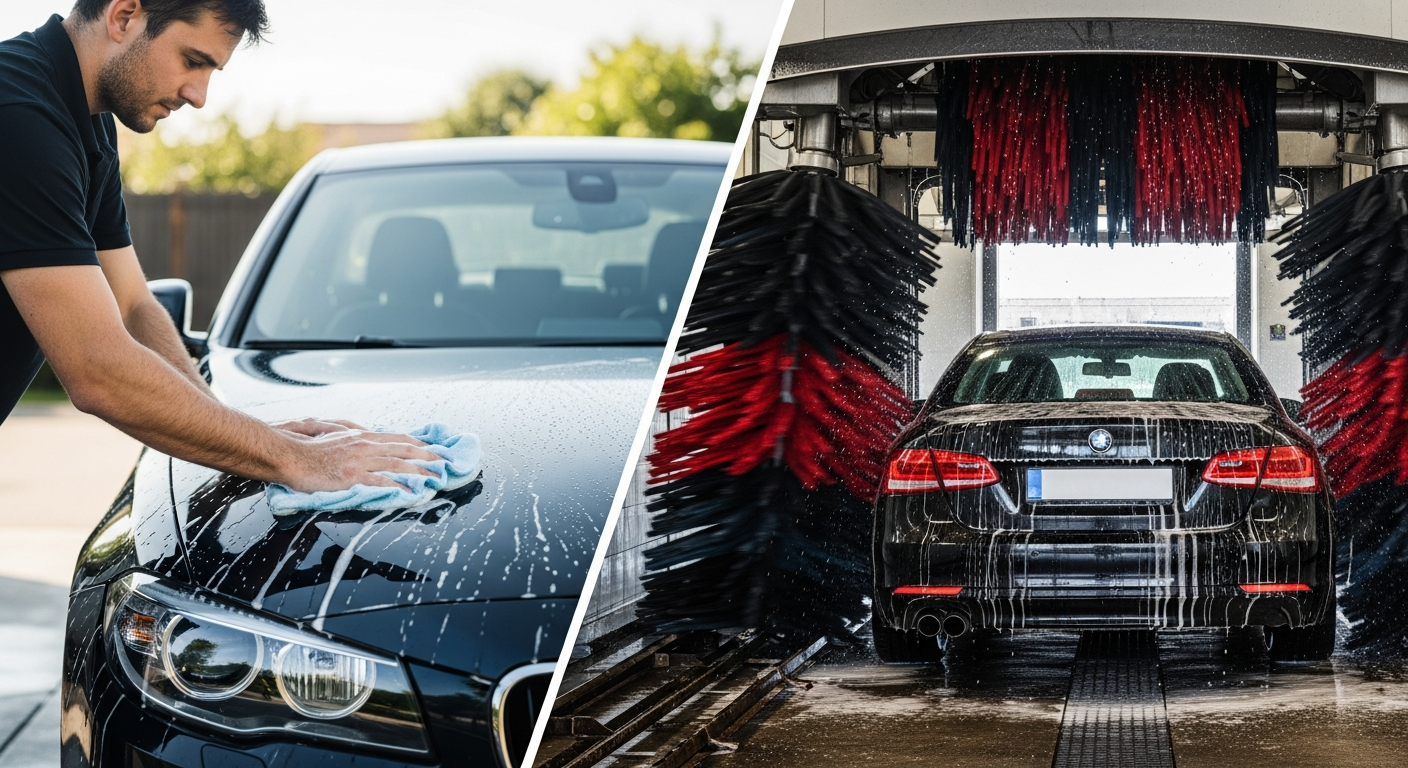
Drive-through car washes are everywhere, and the appeal is obvious: pull in, sit in your car for three minutes, and drive out with a vehicle that looks clean. But “looks clean” and “is clean” are two different things, and what happens to your paint during those three minutes can cost you far more than the $15 you saved by skipping a hand wash.
The Problem with Spinning Brushes
Most automatic car washes use large rotating brushes or cloth strips to agitate dirt off your vehicle’s surface. The fundamental problem is that those brushes can’t distinguish between your paint and the contaminants sitting on it. They drag dirt, sand, and grit across your clear coat at high speed, creating thousands of micro-scratches with every pass.
These micro-scratches are commonly called swirl marks. You’ve seen them — those spiderweb-like circular patterns visible on dark-colored cars in direct sunlight. Each swirl mark is a scratch in the clear coat, and once your clear coat is thin enough, no amount of polishing will restore it. The only fix at that point is a respray.
The brushes themselves compound the problem. They’re used on hundreds of cars between cleanings. The grit from every vehicle that went before yours is embedded in those bristles and cloth strips, essentially turning them into sandpaper. Even “soft-touch” washes still make contact with contaminated materials.
Touchless Washes Aren’t the Answer Either
Touchless automatic washes avoid the brush problem by relying on high-pressure water and chemical detergents to remove dirt. That sounds better, and it is — for your paint. But the cleaning power is significantly reduced without physical agitation.
Touchless systems compensate by using much harsher chemicals. Those detergents are strong enough to strip wax, sealant, and even ceramic coating over time. If you’ve invested in paint protection, a touchless wash is actively undoing that investment. They also struggle with stubborn contaminants like bug splatter, bird droppings, and tar spots that need targeted manual treatment.
The result: your car comes out looking passably clean but still carrying embedded contaminants, and your paint protection has been chemically degraded.
What Makes a Hand Wash Different
A proper hand wash uses the two-bucket method (or a similar contamination-avoidance technique) to prevent dirty water from being reintroduced to the paint surface. Here’s what that looks like in practice:
Pre-rinse: A thorough rinse with low-to-moderate pressure water loosens and removes loose dirt and debris before anything touches the paint. This single step eliminates most of the particles that cause scratching in automatic washes.
Foam or pre-soak: A pH-neutral soap is applied to encapsulate remaining dirt particles, lifting them away from the paint surface so they can be wiped off without dragging.
Hand washing with clean mitts: Soft microfiber or lambswool wash mitts are used panel by panel, rinsed frequently in clean water. The mitt is never reloaded with dirty water. Lower panels (rocker panels, bumpers, wheels) are washed with separate tools to avoid cross-contamination from the dirtiest areas of the car.
Dedicated wheel and tire cleaning: Wheels collect more brake dust and road grime than any other surface on your vehicle. A hand wash addresses them with wheel-specific brushes and cleaners that won’t damage different wheel finishes (chrome, powder coat, painted, anodized).
Drying: Automatic washes use forced air that pushes remaining water (and any dissolved minerals) into streaks and water spots. A hand wash uses clean microfiber drying towels or filtered-air blowers to prevent spotting.
The Results Speak for Themselves
After a professional hand wash, run your fingers across a panel. The surface should feel glass-smooth. After an automatic wash, you’ll often feel a gritty texture — that’s contamination the machine didn’t remove, or particles it ground deeper into the clear coat.
Over time, the difference becomes dramatic. Cars that are exclusively hand-washed maintain their clear coat integrity, depth of color, and resale value. Cars that go through automatic washes regularly develop dull, swirl-marked paint that looks five years older than it is.
Hand Wash Doesn’t Mean Slow
One common objection to hand washes is time. At Ovill Car Wash & Detail, a standard exterior hand wash takes roughly 20 to 30 minutes. You can drop off your vehicle and handle an errand, or relax while the team works. Compare that to waiting in line at a busy automatic wash — the actual time difference is often negligible.
The price difference is real but modest, and it pays for itself in avoided paint correction down the road. A single-stage polish to remove swirl marks typically costs $200 to $400. A few dollars more per wash to prevent that damage entirely is one of the smartest investments you can make in your vehicle’s appearance and value.
At Ovill Car Wash & Detail, every wash is done by hand using clean tools, quality products, and a process designed to protect your paint — not just make it look clean for an afternoon.